

Finding the right clothing size for your child can be challenging because sizing varies between brands, and age-based labels are not always accurate. This Kids Clothing Size Chart by Age helps parents choose the correct size using height, weight, and measurements. Whether you’re shopping for babies, toddlers, or school-age children, this guide will help you find the perfect fit and reduce sizing mistakes.
Buying clothes for children can sometimes feel like a guessing game. One brand’s size 5 may fit perfectly, while another brand’s size 5 feels too small or too large. Since children grow quickly and sizing standards vary between manufacturers, choosing the right size can be challenging.
This complete kids clothing size chart by age will help parents understand children’s sizing, learn how to measure their child correctly, and make smarter purchasing decisions when shopping online or in-store.
Why Children’s Clothing Sizes Can Be Confusing
Unlike adult clothing, children’s sizes are often based on age ranges rather than exact body measurements. While age-based sizing offers a general guideline, every child grows differently.
Factors that affect clothing size include:
• Height
• Weight
• Body shape
• Growth rate
• Brand-specific sizing standards
Because of these differences, relying solely on age can lead to poor-fitting clothing.
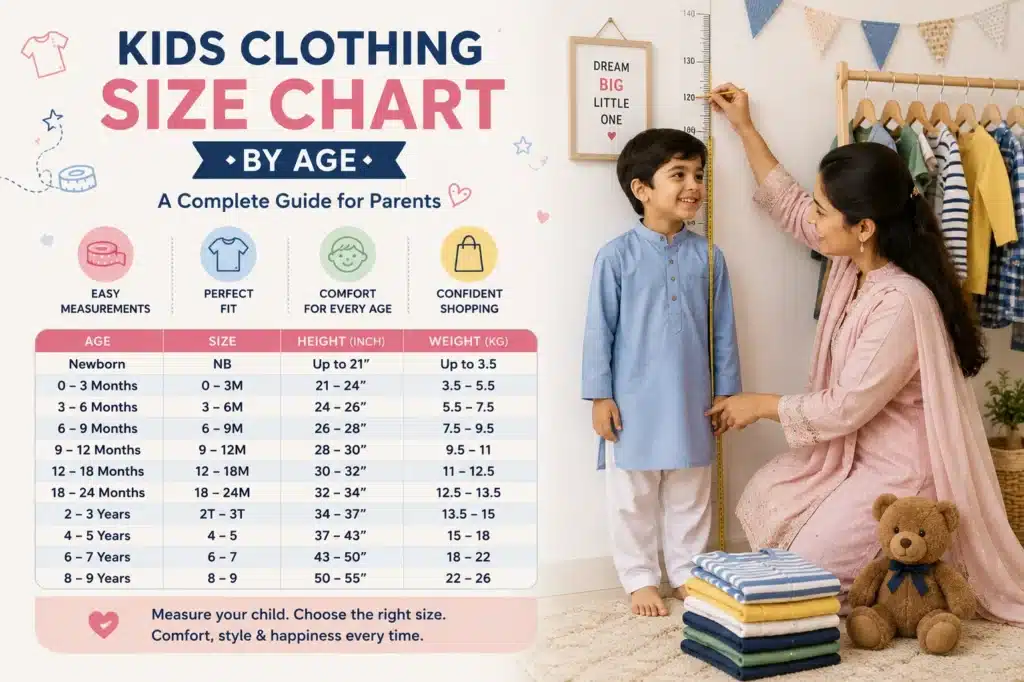
Kids Clothing Size Chart by Age
The following chart provides general sizing recommendations for children.
| AgeSizeHeight (Approx.)Weight (Approx.) | |||
|---|---|---|---|
| Newborn | NB | Up to 21 in | Up to 8 lbs |
| 0-3 Months | 0-3M | 21-24 in | 8-12 lbs |
| 3-6 Months | 3-6M | 24-26 in | 12-16 lbs |
| 6-9 Months | 6-9M | 26-28 in | 16-20 lbs |
| 9-12 Months | 9-12M | 28-30 in | 20-24 lbs |
| 12-18 Months | 12-18M | 30-32 in | 22-27 lbs |
| 18-24 Months | 18-24M | 32-34 in | 27-30 lbs |
| 2 Years | 2T | 33-35 in | 28-32 lbs |
| 3 Years | 3T | 35-38 in | 32-35 lbs |
| 4 Years | 4T | 38-41 in | 35-39 lbs |
| 5 Years | 5 | 41-44 in | 39-45 lbs |
| 6 Years | 6 | 44-47 in | 45-50 lbs |
| 7 Years | 7 | 47-50 in | 50-57 lbs |
| 8 Years | 8 | 50-53 in | 57-65 lbs |
Note: Measurements may vary between brands. Always check the specific size guide provided by the manufacturer.
How to Measure Your Child Correctly
Accurate measurements are the best way to ensure a proper fit.
Height
Have your child stand straight against a wall without shoes. Measure from the top of the head to the floor.
Chest
Wrap a measuring tape around the fullest part of the chest while keeping it comfortably snug.
Waist
Measure around the natural waistline, usually located just above the hips.
Hips
Measure around the fullest part of the hips and bottom.
Inseam
Measure from the inside of the leg down to the ankle.
Recording these measurements every few months helps parents stay ahead of growth spurts.
Understanding Toddler Sizes vs Kids Sizes
Many parents are confused about the difference between toddler sizes and regular kids sizes.
Toddler Sizes (2T to 5T)
Toddler clothing is designed for younger children who still have diaper room and a different body shape.
Features include:
• Extra room around the waist
• Shorter inseams
• Easier closures and elastic waistbands
Kids Sizes (4 to 8 and Beyond)
Children’s sizes offer:
• Longer proportions
• Slimmer fits
• More mature styling
If your child is transitioning from toddler clothing, always compare measurements before moving up to children’s sizes.
Tips for Buying Kids Clothes Online
Online shopping is convenient, but sizing uncertainty often causes parents to hesitate.
Here are some practical tips:
Always Check the Size Chart
Never assume sizing is identical across brands. Compare your child’s measurements to the brand’s chart.
Read Customer Reviews
Reviews often reveal whether clothing runs small, large, or true to size.
Consider Growth
Children grow rapidly. If your child is between sizes, choosing the larger size may provide longer use.
Review Return Policies
A flexible return policy can save time and frustration if the fit isn’t right.
When Should Parents Size Up?
Sizing up can be beneficial in certain situations:
• Purchasing seasonal clothing in advance
• Buying jackets and outerwear
• Shopping for fast-growing toddlers
• Choosing pajamas and loungewear
However, excessively oversized clothing may affect comfort and mobility.
Common Sizing Mistakes Parents Make
Buying Based Only on Age
Children of the same age often have very different body measurements.
Ignoring Height
Height is frequently the most accurate sizing indicator.
Assuming All Brands Fit the Same
Every manufacturer follows different sizing standards.
Not Measuring Regularly
Children can experience growth spurts in just a few months.
Best Clothing Fit Guidelines for Children
A properly fitting outfit should:
• Allow comfortable movement
• Not feel tight around the chest or waist
• Have sleeves that reach the wrist comfortably
• Allow room for growth without appearing oversized
Comfort should always take priority over fashion trends.
Choosing Seasonal Clothing Sizes
Summer Clothing
Look for lightweight fabrics with slightly relaxed fits to improve airflow and comfort.
Winter Clothing
Outerwear should allow room for layering without restricting movement.
When buying winter jackets, many parents choose one size larger to accommodate sweaters and additional layers.
Why Proper Fit Matters
Properly fitted clothing provides more than comfort.
Benefits include:
• Better mobility
• Increased confidence
• Improved durability
• Reduced irritation for sensitive skin
• Greater value for money
Children who feel comfortable in their clothing can focus more on learning, playing, and exploring.
Final Thoughts
Finding the right clothing size for your child doesn’t have to be difficult. While age-based sizing offers a useful starting point, taking accurate body measurements remains the most reliable method for selecting the perfect fit.
By using a trusted kids clothing size chart by age, measuring your child regularly, and reviewing brand-specific size guides, you can confidently shop for clothing that fits well, lasts longer, and keeps your child comfortable throughout every stage of growth.
Frequently Asked Questions
What size should a 5-year-old wear?
Most 5-year-olds wear size 5 or size 5T, depending on their height and weight. Always check measurements for the best fit.
How often should I measure my child?
Children should be measured every three to six months, especially during periods of rapid growth.
Is height or age more important when choosing a size?
Height is usually a more accurate sizing indicator than age.
Should I buy a larger size for growing children?
If your child is between sizes or nearing a growth spurt, sizing up can often be a practical choice.
Why do clothing sizes vary between brands?
Each manufacturer uses different sizing standards, which is why checking individual size charts is important.